Driving to Italy This Summer? EV Charging on the Routes South
Every summer, thousands of drivers point their electric cars south toward Italy — over the Brenner, through the Gotthard, or down the coast. The good news is that the charging landscape on these corridors is now dense and fast. This guide walks the routes south the way an EV driver sees them: not turn by turn, but charger by charger — where the fast charging sits, what changes at each border, and how to keep it all on one app and one free card.
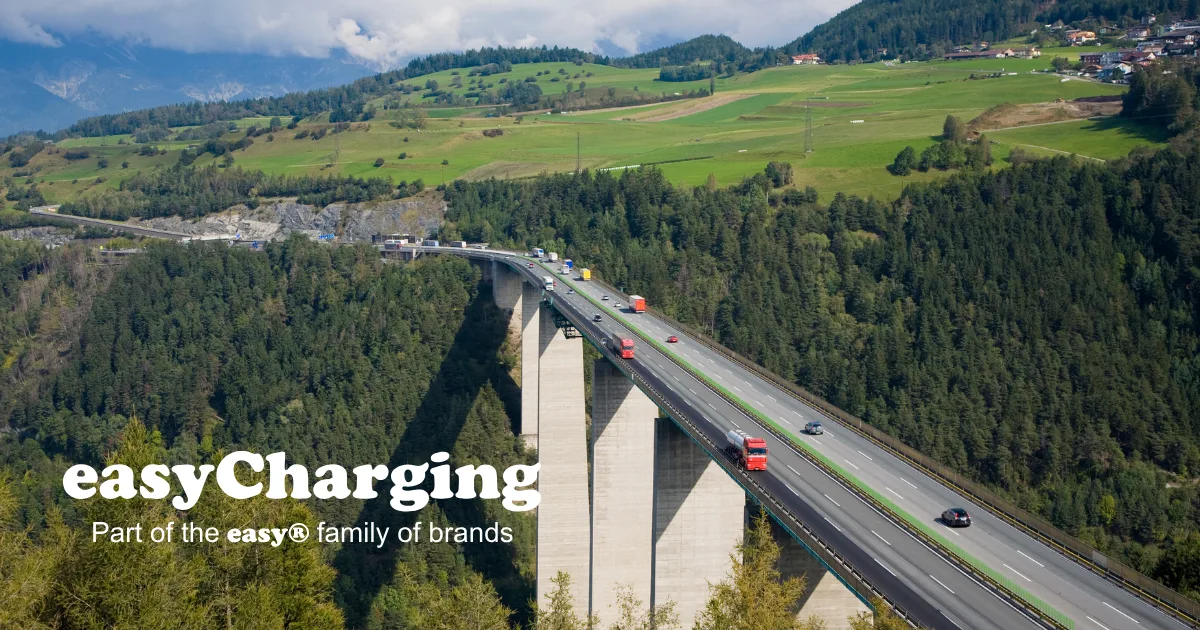
Few drives feel as good as the run south to Italy — the Alps rising ahead, the air warming with every hour, an espresso waiting at the other end. In an electric car, the question that used to hang over that drive was charging: where, with what app, at what price? On the main corridors to Italy in 2026, that question has a calm answer. The fast charging is there, it’s dense, and you can keep the whole trip on one account.
This isn’t a route plan — you’ll navigate with whatever you already trust. It’s a look at the charging landscape along the way south, so nothing about plugging in catches you off guard.
The two great corridors south
Most EV drivers heading to Italy from German-speaking Europe take one of two roads through the mountains. Both are now lined with high-power charging.
The Brenner corridor — Germany → Austria → Italy. The classic route over the Alps’ lowest motorway pass. On the Austrian approach you’ll find high-power sites along the motorway network, with fast charging continuing right up to the pass itself. Drop down into South Tyrol on the A22 and the coverage stays strong — the motorway operator runs its own charging network the length of the valley, complemented by regional providers powered largely by Alpine hydro. It is, in charging terms, one of the best-equipped border crossings in Europe.
The Gotthard corridor — through Switzerland → Italy. The route through the heart of Switzerland on the A2. The major service areas on the way carry high-power charging from the main Swiss networks, and the Italian side picks up immediately as you descend toward Lake Maggiore and Milan. If the Gotthard tunnel is backed up — and in high summer it often is (more on that below) — the San Bernardino is the long-standing alternative further east.
The western and coastal routes — France → Italy. Coming up from France, drivers cross via the Fréjus or Mont Blanc tunnels, or follow the coast past Ventimiglia. France has fast charging at essentially every motorway service area now, and the Italian Riviera autostrade are covered by the main national operators on the other side.
The common thread: on every one of these roads, the chargers are there. What changes is who runs them — and that’s exactly the friction one app removes.
What charging looks like once you’re in Italy
Italy’s motorway charging has come a long way. A clear majority of autostrada service areas now have at least one high-power charger, and the rollout is still accelerating. A handful of national networks do most of the work — the motorway operator’s own high-power brand, the big energy-company networks, a major carmaker joint venture, and the usual pan-European players you’ll already recognise from home. (One thing worth knowing: Autogrill is the food-and-fuel brand at Italian service areas, not the charging operator — the chargers in the car park belong to one of those networks.)
The picture is densest across the north — Lombardy, the lakes, the motorways feeding Milan and Turin — and thins out as you go further south, so it pays to top up while coverage is thick rather than running low in quieter regions. Across all of them, the live map in the app matters more than memorising operator names.
Our Italy guide has the practical side — ticket tolls, the ZTL rules and where the fast charging sits — with city guides for Rome and Milan.
Live availability and live pricing, at a stop you’ve never used
Here’s where an unfamiliar country stops being stressful. Pull into an Italian area di servizio or an Austrian Raststätte you’ve never seen before, and two questions matter: is a charger free, and what will it cost?
The easyCharging app answers both before you commit. Live availability shows you which nearby chargers are actually free right now — so on a busy holiday Saturday you can skip a full site and roll on to the next one instead of waiting in a queue. And live pricing shows the current rate at that specific charger before you plug in. Public charging prices vary widely by operator, country and speed, and they change often — so seeing today’s price for this charger, rather than guessing, is the difference between charging with confidence and a nasty surprise on the receipt. (We broke the cost picture down market by market in our guide to EV charging costs across Europe.)
Border practicalities that touch your charging stops
A few things at the borders are worth sorting before you go, because they shape where and when you stop.
- Switzerland — the vignette. Driving on Swiss motorways requires the vignette, EVs included; it’s CHF 40 for the year, as a sticker or a digital e-vignette tied to your plate. Switzerland sells only the annual version, so buy it before you reach the motorway. More in our Switzerland guide.
- The Gotthard in high summer. The Gotthard road tunnel is famous for holiday-season tailbacks — queues of several kilometres are routine on peak July and August weekends. The charging lesson is simple: top up before you reach the tunnel approach, not in the middle of a two-hour crawl, and keep the San Bernardino in mind as a relief route.
- Austria — the vignette and the Brenner toll. Austria also requires a motorway vignette (a short 10-day version is available for a holiday trip, sticker or digital). Note the Brenner pass itself is a separate special toll on top of the vignette, and the Italian A22 is a separate ticket toll again — three independent systems, none of which affect charging directly, but all worth budgeting for. See our Germany guide for the northern leg and France if you’re coming from the west.
(Vignette and toll prices change from year to year — check the current rate before you travel.)
One app, one free card — no new sign-up at every border
This is the part that turns three countries into one trip. Without it, the Italy run means a German app for the autobahn, something else for Austria, a Swiss network through the Gotthard, and an Italian app for the autostrada — four sign-ups, four logins, four ways to be caught out at a charger in the rain.
With one app, none of that changes at the border. The same account finds chargers, shows the live price and starts the session in Germany, Austria, Switzerland and Italy alike. And the free RFID card rides along as your backup: at an older charger in an Alpine valley with one bar of signal, you tap the card and the session starts anyway. One card covers the whole network — so it lives in the glovebox and you forget about it until the moment it saves the day. (We made the full case for travelling on a single app in our guide to charging your EV abroad.)
A short pre-trip checklist
Sort these once and the charging side of the drive looks after itself:
- Install the app and sign in on the account you’ll use for the trip.
- Order your free RFID card in advance so it’s in the car before you leave — get it here.
- Buy your vignettes (Switzerland and/or Austria) before you reach the motorway.
- Make checking live pricing and availability a habit — glance at the app before each stop, not after.
- Charge while coverage is dense — top up on the busy northern corridors rather than running low further south.
The bottom line
The drive to Italy is one of Europe’s great summer journeys, and in 2026 the charging no longer asks for a leap of faith. The fast chargers line the Brenner and the Gotthard, the Italian autostrade are catching up quickly, and with one app, one free card and live pricing across a network of more than 900,000 charging points in 35 countries, every border you cross changes the scenery — not the way you charge. Download the app, order your free card, and point the car south.
Frequently asked questions
Where can I fast-charge on the way to Italy?
The two busiest southbound corridors are both well covered. On the Brenner route (Germany–Austria–Italy) you'll find high-power charging along the Austrian motorway approach, at the pass itself and down the A22 in South Tyrol. On the Gotthard route (through Switzerland) the main service areas on the A2 have fast charging, with more on the Italian side. Operators differ by country, but with one app you find and start a session at any of them on the same account — and see the live price first.
Do I need a Swiss vignette to drive an EV through Switzerland?
Yes. Switzerland's motorway charge (the vignette) applies to all cars under 3.5 tonnes, including electric ones — there is no EV exemption. It costs CHF 40 for the year and is sold either as a windscreen sticker or as a digital e-vignette linked to your number plate. Switzerland only sells an annual vignette, so there is no short-term option. Buy it before you reach the motorway.
Can I see live charger availability and pricing while driving abroad?
Yes. The easyCharging app shows live pricing at charging points across its European network, so when you pull into an unfamiliar service area you can check what a session costs before you plug in. Prices vary by operator, country and charging speed and change frequently, so checking live is the only reliable way to know the current rate.
Do I need a different charging app for Austria, Switzerland and Italy?
No. That's the whole point of one app for Europe. The same easyCharging account and the same free RFID card work across the network in Germany, Austria, Switzerland and Italy, so you don't have to install a new app or order a new card each time you cross a border mid-holiday.
Will charging stops be busy in the summer holidays?
Popular stops on holiday corridors can get busy on peak travel days — typically the Friday and Saturday changeovers in July and August. Live in-app availability helps you see which nearby chargers are free before you commit to a stop, so you can roll on to the next site rather than join a queue.